


If you’ve spent much time searching for affordable hearing aids online, there’s a good chance that you’ve read something about MDHearing. The Chicago-based brand has sold over 500,000 pairs and features NFL star Joe Namath as a spokesperson.
I’ve tried several of MDHearingAid’s OTC models to see how they stack up against the competition. In this review, I’ll share the details of my experience (with photos), along with where I think these devices fit in today’s hearing health landscape.
Prefer to watch?
Some background on MDHearing
Dr. Sreekant Cherukuri, a Certified Ear, Nose, and Throat Physician, founded MDHearingAid in 2009. After years of patient care, Dr. Cherukuri started the brand to help make hearing aids more affordable. To do that, he sold directly to the consumer online. Instead of working with audiologists to program each pair, he programmed all devices to work for the most common hearing needs.
Over time, MDHearing introduced new products including top sellers like MDHearing Air and MDHearing Neo XS.
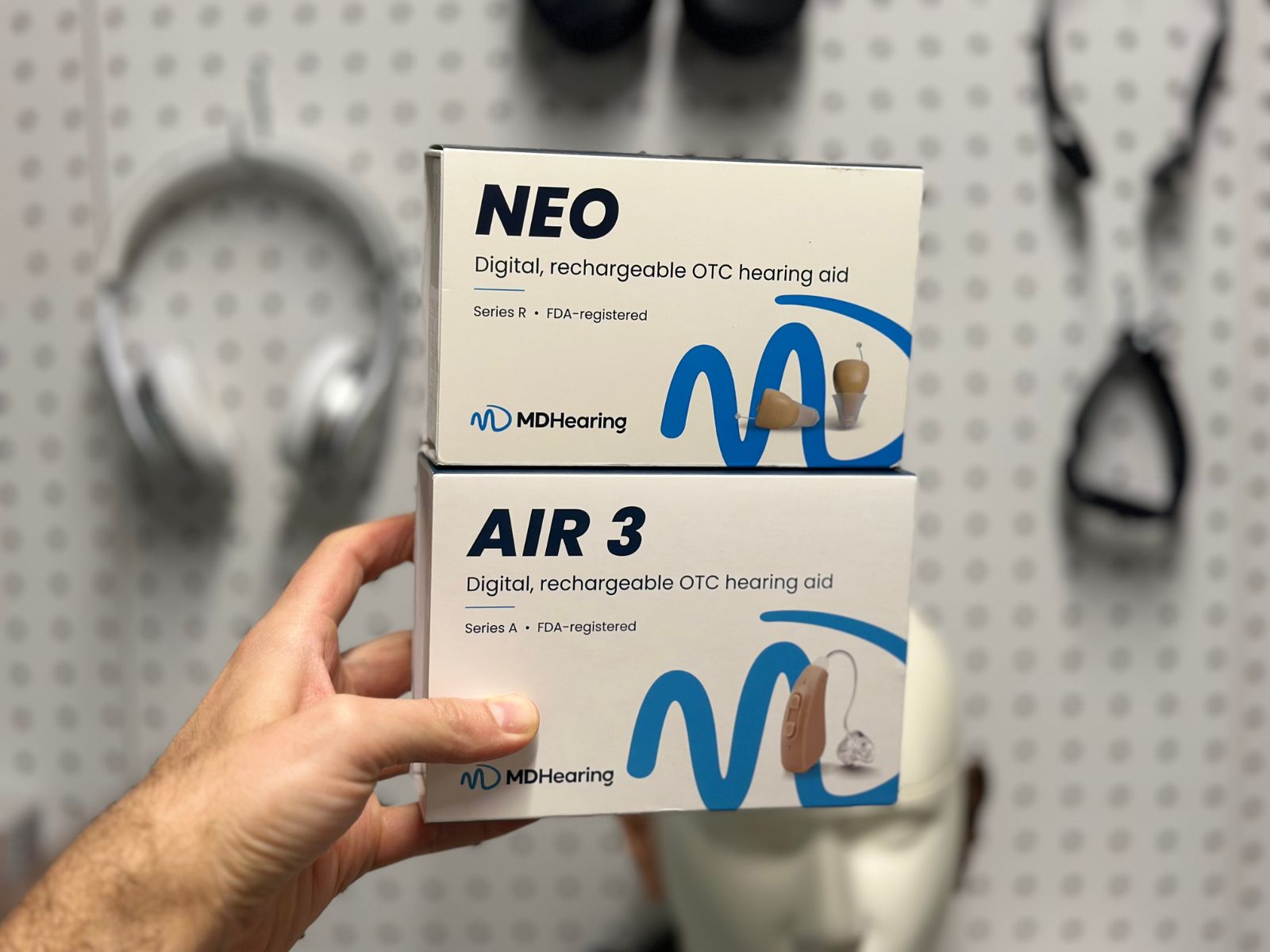
Available MDHearing Models
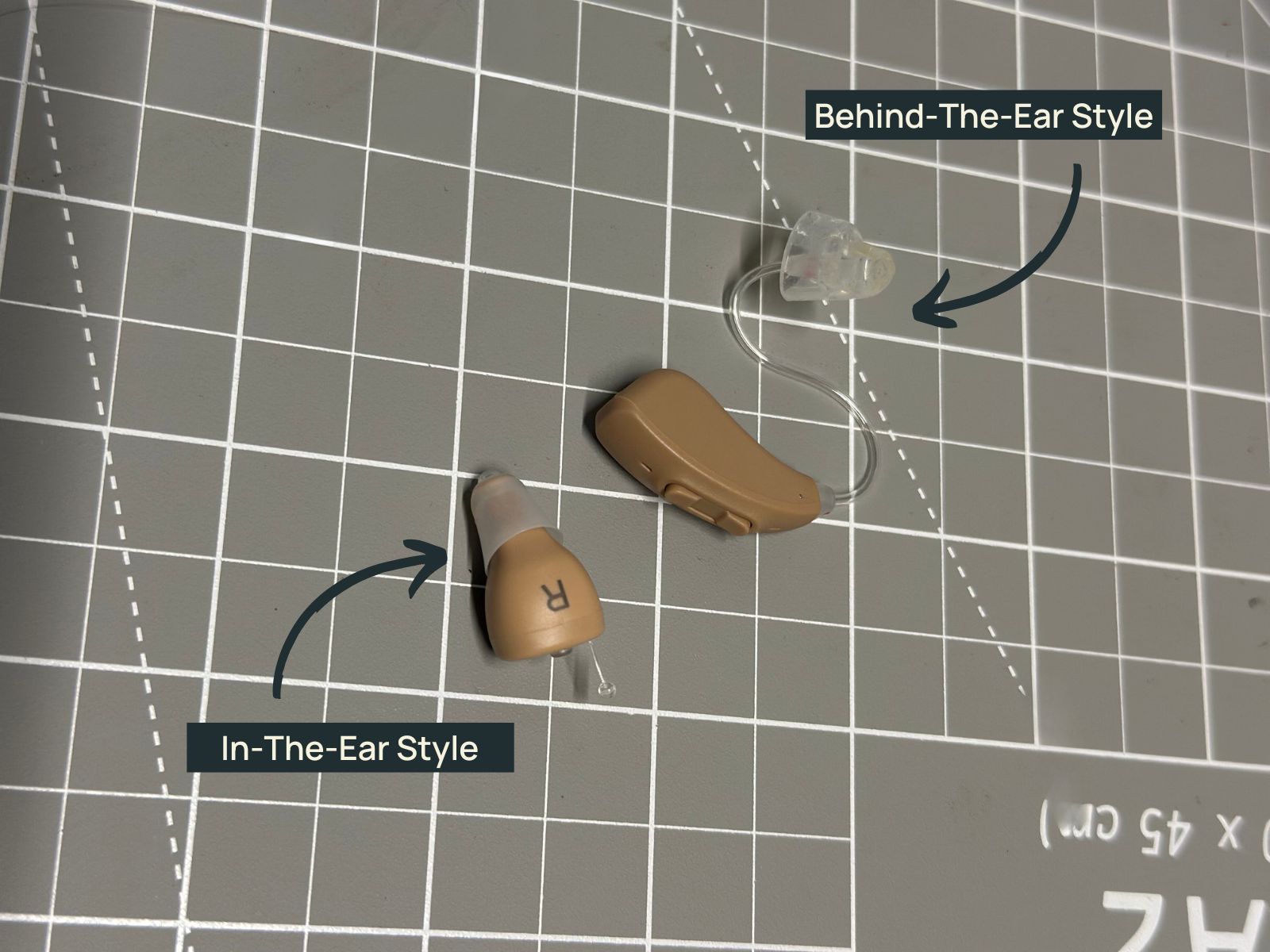
MDHearing currently offers a range of hearing aids, from their in-ear Neo models to their behind-the-ear VOLT and AIR devices.
MDHearing nearly always shows significant discounts on their site, but you can expect to pay between $300 and $600 for a pair of devices from the brand. Shoppers can checkout online through a reasonably straightforward process.
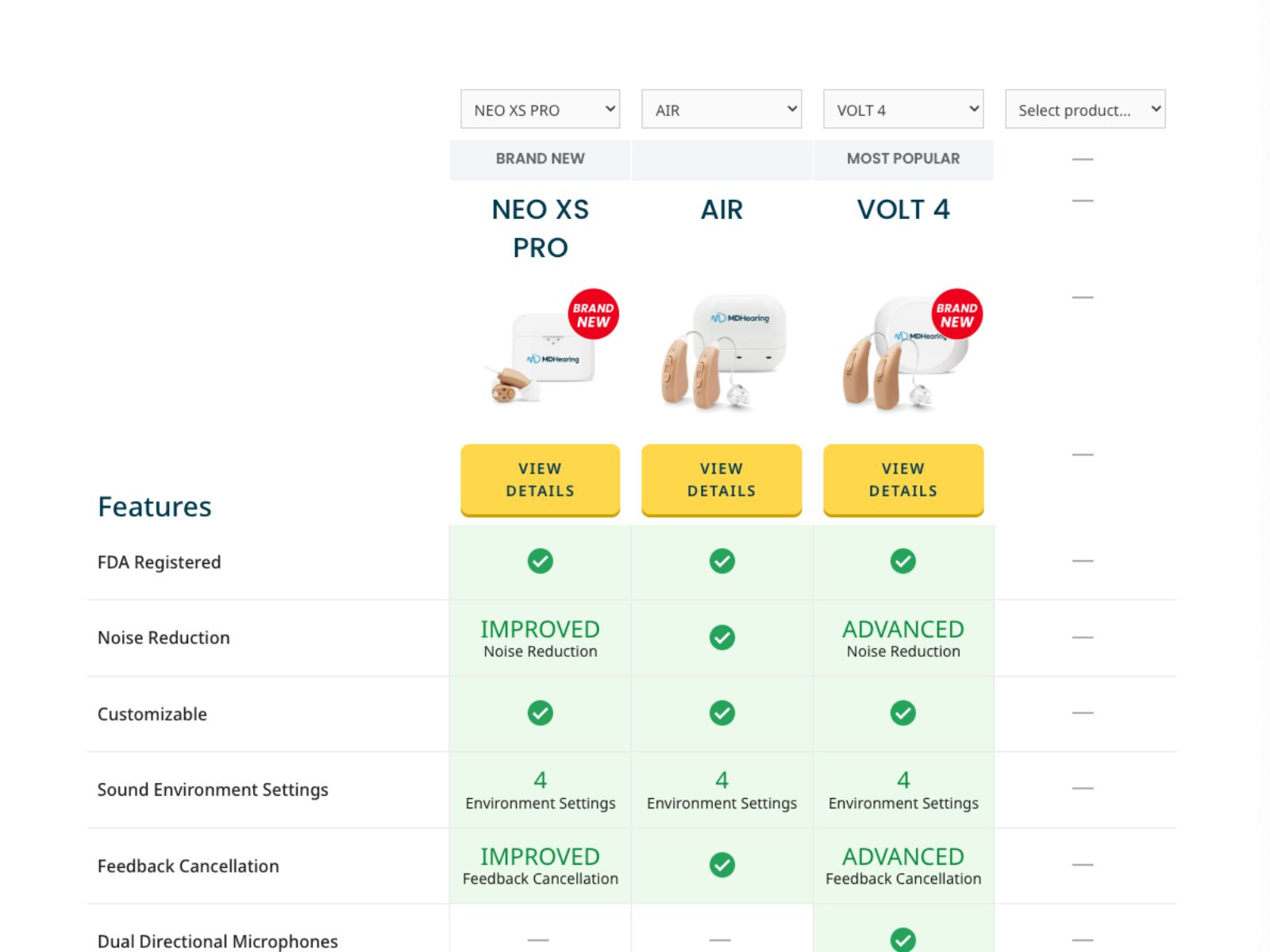
Here's a rundown of available products.
MDHearing Unboxing
In my recent review, I tested the AIR and NEO models from MDHearing. I spent several hours setting up the devices and a few weeks using them day to day. Below are my notes and key takeaways. Since that review, MDHearing has expanded their lineup, and we plan to revisit the brand with an updated review in 2026.
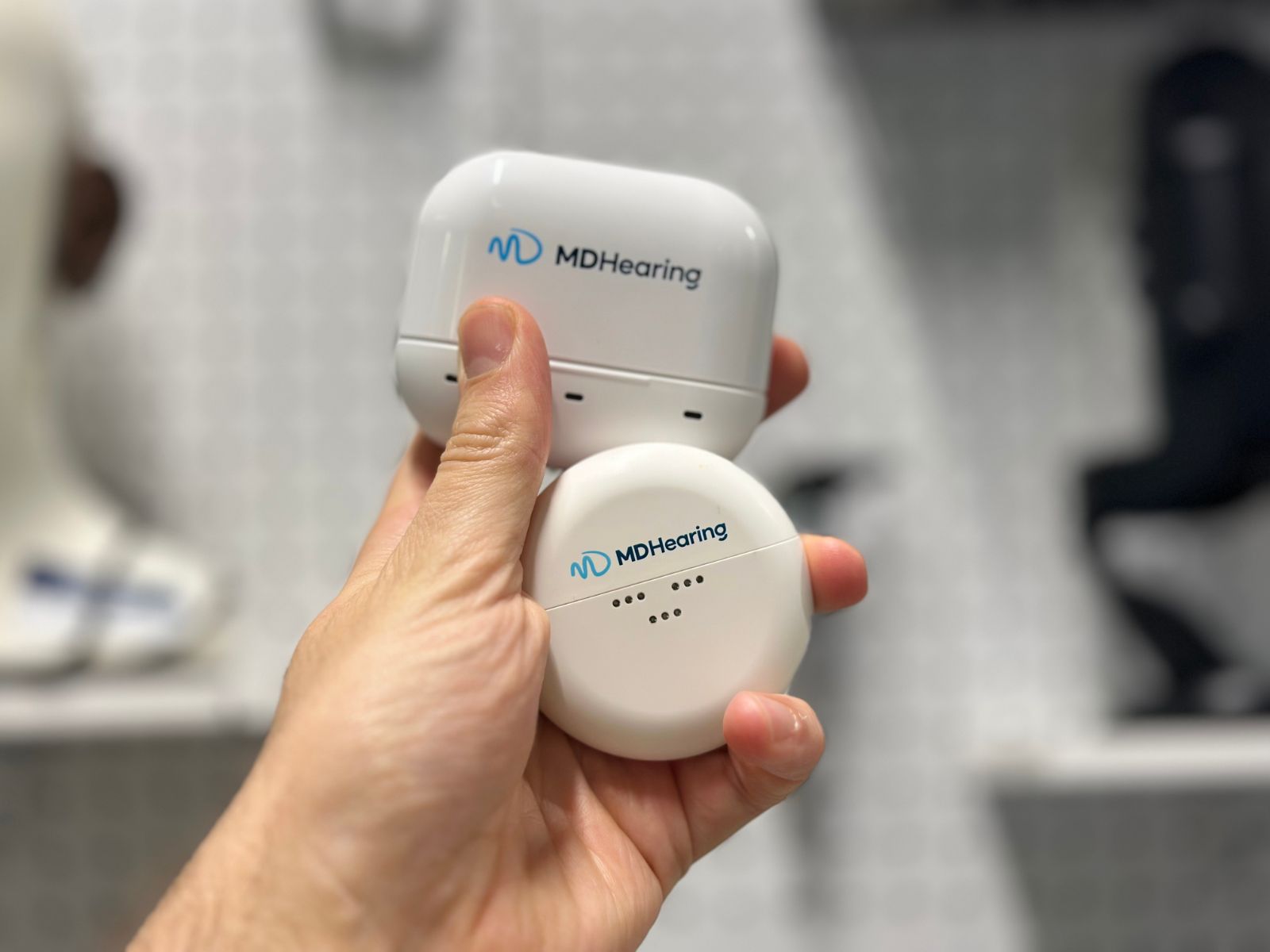
MDHearing products come in a compact box with a few supplies, a user manual, and a pair of hearing aids inside their charger. I put the devices on the charger for an hour or so before putting the devices in my ears.
MDHearing Air and Volt
The behind-the-ear MDHearing products offer a volume dial or rocker switch to adjust volume and programs. Both of the behind-the-ear devices offer four pre-set programs. The dial or switch turns up the volume, and a longer press on the button changes the program.
- The Quiet program is recommended for watching TV or spending time in your quiet home with low conversation.
- The Social program optimizes clarity of voice without significant background noise suppression.
- Noisy and restaurant modes both optimize for background noise reduction.
MDHearing NEO
Neo has a single button onboard. Each click of the control raises the volume by three decibels. Once you reach the top volume, you'll hear a long beep, and then the volume will return to the lowest setting before going up again. Each ear operates independently.
MDHearing does not have a programming app or customization process, so the hearing aids are set to match standard hearing loss configurations and won't be specific to your loss. This is common among sub $500 products on the market, while $1,000-$5,000 products offer apps or doctor support to customize the sound to your loss.
Sound Quality and experience

I think of sound quality in a few different categories.
Clarity of Speech
The primary role of any hearing aid is to improve speech clarity and make everyday conversations easier. In this respect, MDHearing delivers reasonable performance for its price point. While these devices do not match the speech clarity or noise management of leading OTC options like Sennheiser All Day Clear, they do amplify key speech frequencies and provide some control over background noise.
In my experience, MDHearing would not be my first choice for demanding environments such as dinner parties or important meetings. However, they can be serviceable in quieter, less dynamic settings. I also noticed a tendency to over-amplify sudden sounds and some difficulty separating voices from competing noises, such as paper movement.
That said, these devices are far from a gimmick. MDHearing has thousands of positive customer reviews, and many users clearly find meaningful value in the performance and accessibility they offer.
Comfort
Another factor is comfort. If devices aren't comfortable, I'm unlikely to wear them and, therefore, less likely to benefit. In my experience, behind- the-ear versions of MDHearing aids are more comfortable for all-day wear since they limit occlusion (boominess of your voice).
Another aspect of comfort is the product's ability to manage feedback. On this front, I'd give passing marks to the Air and Volt models. I did find that Neo was more susceptible to feedback (squealing).
Tip: When you pull Air or Volt out of their charger, I recommend turning the volume down before placing the product in your ears. This will help prevent feedback during the process of putting the devices on.
Overall Thoughts
There are no two ways around it: MDHearing devices are affordable and basic. If I put up a chart comparing MDHearing to my prescription hearing aids, MDHearing would fall behind pretty quickly, but those prescription products are also thousands of dollars for a pair.
If you are looking for a pair of hearing aids with simple features and reasonable performance MDHearing could be worth considering. I'd suggest you compare the product to ELEHEAR Beyond or Sennheiser All Day Clear.
MDHearing offers free product returns for 45 days, like most reputable hearing brands. That allows you to try the product and decide if it suits your needs.
I hope you've found this review helpful. If you have questions or thoughts, you can contact us at [email protected].


